Trezor.io/start: Beginner’s Guide to Hardware Wallet Security
Master the essentials of safeguarding your cryptocurrency using Trezor hardware wallets. From setup to best practices, this guide equips you to manage your assets confidently.
Understanding Trezor and Crypto Self-Custody
Cryptocurrency ownership isn’t just about holding digital coins; it’s about control and security. A Trezor hardware wallet keeps your private keys offline, immune to online attacks and phishing schemes. This level of self-custody ensures that only you can access and manage your crypto.
Whether dealing with Bitcoin, Ethereum, or smaller altcoins, following the official trezor.io/start setup guarantees adherence to safety protocols, helping prevent loss or theft.
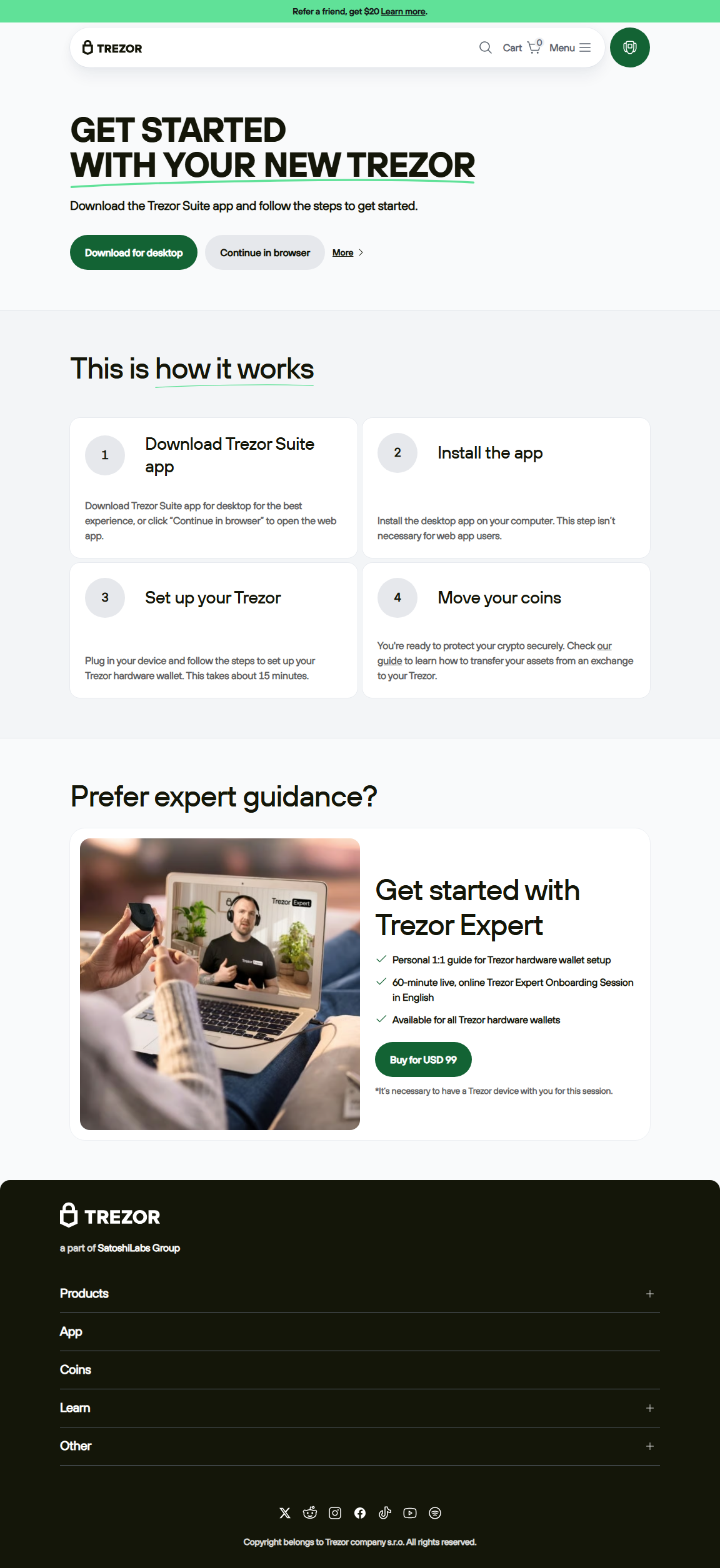
Step-by-Step Setup at trezor.io/start
Step 1: Unboxing & Inspection
Check the seal and packaging for tampering. Keep your pen and paper ready to record your recovery seed safely offline.
Step 2: Visit trezor.io/start
Type the URL manually in a secure browser. Avoid clicking any email links or search engine results to prevent phishing attacks.
Step 3: Install Trezor Suite
Download the official app, follow device detection, and install firmware updates. Trezor Suite is the secure hub for managing all crypto assets.
Step 4: Set PIN & Generate Recovery Seed
Choose a strong PIN and write down your recovery seed offline. This is the only way to restore access if the wallet is lost or damaged.
Important Crypto Terms
- Private Key: The unique code that grants access to your funds.
- Recovery Seed: A backup phrase that restores wallet access if lost.
- Cold Wallet: Offline storage like Trezor, shielded from hacking.
- Hot Wallet: Online wallets, more convenient but less secure.
- Blockchain: Distributed ledger technology that records all transactions.
- Two-Factor Authentication (2FA): Adds an extra security layer for online accounts.
Trezor vs Hot Wallets: A Quick Comparison
| Feature | Trezor Hardware Wallet | Hot Wallet |
|---|---|---|
| Security | Offline storage, resistant to hacking | Online, exposed to malware & phishing |
| Accessibility | Device connection required | Always accessible via browser or mobile |
| Control | Full private key ownership | Third-party control common |
| Best Use | Long-term storage, high-value crypto | Daily transactions, active trading |
"Owning a Trezor wallet is more than hardware—it’s about empowering yourself to take control of your digital wealth safely."
FAQs for Beginners
Can beginners use Trezor easily?
Yes, the setup via trezor.io/start is intuitive and secure, designed for users with no prior hardware wallet experience.
What if I lose my Trezor?
Your recovery seed allows full restoration on any compatible device. Always store it offline and secure.
Does Trezor support multiple cryptocurrencies?
Yes. Trezor Suite supports numerous coins and tokens, making multi-asset management safe and convenient.
How do I avoid phishing scams?
Always type trezor.io/start manually, verify SSL certificates, and never share your recovery seed with anyone.
Start Your Crypto Security Journey
By following trezor.io/start, you can confidently secure your crypto, understand self-custody, and take full control of your digital wealth for the long term.